Inquiry

Leave Your Message

2026 Nic Salt Vape E-Liquid Compliance Guide for Buyers

A bottle can look polished and still leave important questions unanswered. For buyers, a 2026 Nic Salt Vape E-Liquid compliance check should begin with the label, not the marketing copy. Look for clear ingredient information, nicotine-strength details, batch identification, manufacturer contact details, and age-related warnings where required. Compare the package with the product listing. Small mismatches matter.

Former FDA Commissioner Dr. Scott Gottlieb warned that “youth use of e-cigarettes has reached epidemic proportions.” His statement highlights why responsible product controls and careful communication matter. Buyers should confirm that suppliers follow the rules in the destination market, since requirements differ and can change. Check current official guidance rather than relying on an old checklist or a seller’s assurance. Keep invoices and product records, too. They can help clarify where a product came from if details later need review.

Details deserve attention. A missing batch code, unclear nicotine disclosure, or unsupported health claim is reason to pause and ask questions. Do not assume that attractive packaging proves compliance. Nor does a familiar flavor name verify ingredients. This guide outlines practical checks for sourcing, labeling, documentation, and supplier credibility. It is not legal advice, and local requirements should always be confirmed with relevant authorities. Even experienced buyers can overlook one small field. That deserves a second look.
2026 Nic Salt Vape E-Liquid Compliance Guide for Buyers

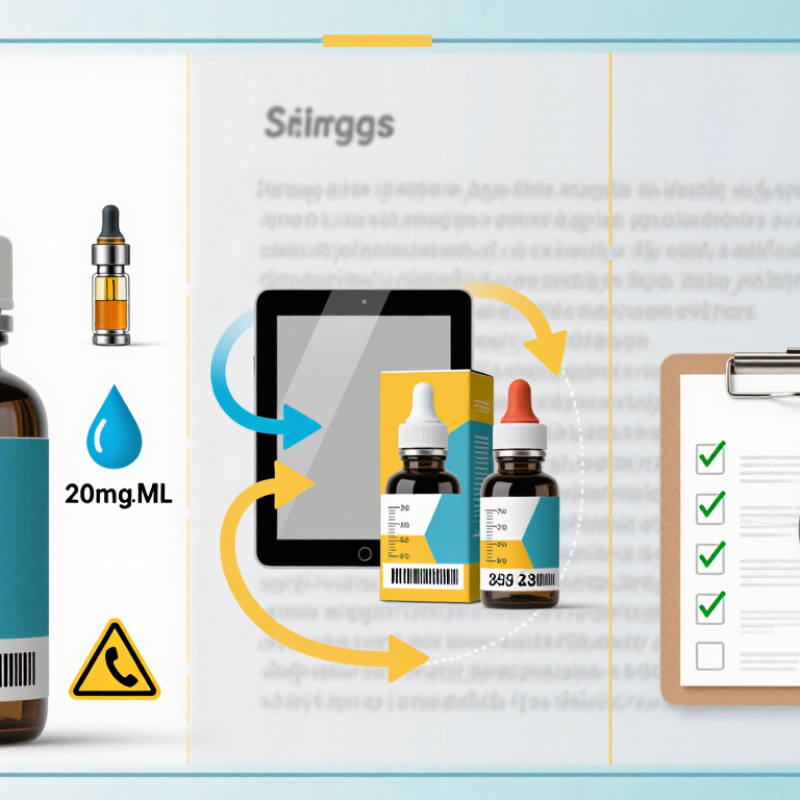
Define Nicotine Salts and the EU Limit of 20 mg/mL

Nicotine salts are forms of nicotine made by combining nicotine with an acid. This changes the liquid’s chemical properties; it does not remove nicotine or make it risk-free. In e-liquid, the stated strength is usually measured in milligrams per millilitre (mg/mL). Check the label carefully. A 10 mL bottle marked 20 mg/mL contains 200 mg of nicotine in total, not 20 mg.

For nicotine-containing e-liquids covered by EU rules, the maximum permitted concentration is 20 mg/mL. This is a concentration limit, not a recommended strength. A product labelled 25 mg/mL would exceed that EU limit, even if its bottle were small. Keep the units straight. They are easy to confuse when comparing shelves or online listings.

Buyers can compare the printed concentration with the product information and packaging, rather than relying on terms such as “smooth” or “strong.” Those descriptions do not tell you the nicotine amount. Check the country’s current official guidance, too, since requirements and enforcement details can change. One detail can still be unclear: product labels may be small, and poorly printed numbers are hard to read. If the concentration is not legible or consistent across the packaging, do not guess.
Compare EU Product Limits: 2 mL Tanks and 10 mL Refill Bottles

When comparing EU-compliant nicotine-salt vape products, check the container sizes before considering flavour or device design. A tank or cartridge is generally limited to 2 mL, while a refill bottle containing nicotine e-liquid is limited to 10 mL. These are separate limits: a larger refill bottle does not make a larger tank compliant.

Look for clear capacity and nicotine-strength information on the packaging. EU rules also cap nicotine concentration at 20 mg/mL for covered products. Read the label closely; “nic salt” describes the nicotine form, not an exemption from these limits.

A practical check is simple: compare the printed tank capacity with the device specification, then inspect the refill bottle volume. Small print can be easy to miss.

Rules are implemented nationally, and additional local requirements may apply. Check current guidance for the country where you plan to buy or use the product. Packaging should also provide required warnings and product information. Paperwork can feel dull. It matters. If a listing gives conflicting capacities, or leaves the nicotine strength unclear, pause and verify the details with the seller or relevant regulator before buying.

Check EU Notification Rules: Submit Product Data 6 Months Ahead

For nicotine-salt e-liquids, EU buyers should verify that the responsible manufacturer or importer has submitted product data through the EU Common Entry Gate (EU-CEG). Under Article 20 of the Tobacco Products Directive, notification is required at least six months before a product is placed on the market. The file includes ingredients, emissions, toxicological information, nicotine delivery details, and product descriptions. This is easy to underestimate. A changed formula or product detail can affect the notification record, so buyers should request dated confirmation and match it against the exact item being sourced.

The European Commission’s 2021 report on the Directive’s application recorded more than 14,000 notified e-cigarette products and over 100,000 refill containers in the EU-CEG. That scale makes careful record-checking practical, not fussy. Ask for the notification reference, target Member State, and latest submission date; keep the answers with purchase documents. A notification is not an endorsement of product quality, and national requirements may differ. Paperwork can look complete while referring to another formulation. Check the details, and allow time for questions before committing to a launch date.

Review Labels: 30% Health Warnings and Child-Resistant Packaging

A nic-salt e-liquid label should be easy to inspect before purchase. Where local rules require a health warning covering 30% of the label, check that it is clear, readable, and not hidden by a fold or sticker. Warning text and placement can vary by location, so compare the package with current official guidance. Look for a full ingredient list, nicotine concentration, batch details, and age-related notices. Small print can be hard to judge under shop lighting. Take a closer look.

Child-resistant packaging should resist opening by young children while remaining usable for adults. Check that the cap closes securely after use and that the bottle shows no leaks, cracks, or tampering. A child-resistant cap is not childproof. Store nicotine liquids locked away, separate from food and out of children’s reach. Packaging can look compliant yet still be damaged, so inspect the seal and closure rather than relying on appearance alone. Requirements change, and a quick visual check cannot confirm every detail.

Tips: Read the warning before buying. Check the seal, cap, and printed concentration. If wording is unclear, ask the seller or consult an official local source. Don’t guess; labels can be confusing, and that deserves a second look.

2026 Nic Salt Vape E-Liquid Compliance Guide for Buyers - Review Labels: 30% Health Warnings and Child-Resistant Packaging

Use this checklist to review nicotine-salt e-liquid packaging. Requirements depend on the destination market and product type; a label or package that appears compliant in one jurisdiction may not be compliant in another.

Review Area United States European Union Buyer Check
Nicotine health warning Covered e-cigarette product packages must display the FDA warning: “WARNING: This product contains nicotine. Nicotine is an addictive chemical.” The warning must occupy at least 30% of each of the two principal display panels. Packages of covered nicotine-containing e-cigarette products must carry the prescribed health warning. It must cover at least 30% of the two largest surfaces; the required percentage can increase for larger surfaces. Check the exact wording, legibility, placement, and required warning area for the market where the product will be sold.
Child-resistant packaging Liquid nicotine containers subject to federal requirements must use special packaging that meets applicable child-resistance standards. Nicotine-containing e-cigarette refill containers and devices must meet applicable child-resistant and tamper-evident packaging requirements. Request evidence that the specific container and closure—not merely the outer shipping box—meet the destination market’s packaging rules.
Tamper evidence and leakage protection Check applicable packaging and product-safety requirements for the product and its container. Do not treat a child-resistant closure as proof of tamper evidence. Packaging must be protected against breakage and leakage and include the required tamper-evident features. Inspect seals, closures, bottle integrity, and leak protection; confirm the configuration matches the compliance documentation.
Nicotine strength and container limits Do not assume a single federal nicotine-strength or refill-container limit applies in every sales context. Check current federal, state, and local rules. Under the EU Tobacco Products Directive, nicotine concentration in covered e-liquids is limited to 20 mg/ml. Refill containers are limited to 10 ml, and cartridges or tanks to 2 ml. Compare the labeled nicotine concentration and container volume with the rules applicable to the intended market.
Ingredient and nicotine information Review the package for the required warning and applicable product disclosures; requirements can depend on product status and sales jurisdiction. Packaging must include required product information, including the nicotine content and nicotine delivery per dose, plus the ingredient list and other prescribed particulars. Check that the declared strength and ingredients are consistent across the package, product documentation, and any required notification records.
Market authorization or notification FDA regulates e-cigarette products. A buyer should verify the product’s applicable FDA marketing status; a manufacturer’s or seller’s claim alone is not proof of authorization. Manufacturers and importers must submit the required product notification to the relevant Member State authorities at least six months before intended placement on the market. Ask for verifiable, product-specific regulatory records for the destination market and confirm they match the product’s formulation and presentation.
Advertising and sales restrictions Federal, state, and local rules may restrict advertising, sales, age verification, or particular product types. EU-wide rules and Member State laws may restrict advertising, sales, or product presentation; national requirements can differ. Confirm current age-verification, advertising, and retail rules for every place where the product will be offered.
Practical evidence to request Product-specific FDA status information and documentation supporting applicable packaging and label claims. Product-specific notification information and documentation supporting packaging, warning, and product-information requirements. Keep dated copies of label artwork, package specifications, test or compliance documents, and destination-market checks.

Important: The 30% warning-area rule is not a universal global standard. In the United States and the EU, the required warning text, measurement method, packaging scope, and related rules differ. Verify current requirements with the relevant regulator or qualified compliance counsel before purchase or sale.

Official references: U.S. FDA, Vaping Products and Electronic Cigarettes; U.S. Consumer Product Safety Commission, Poison Prevention Packaging Act guidance; European Union, Directive 2014/40/EU, Article 20.

Verify U.S. FDA Marketing Authorization Before Sale

Before buying nicotine salt e-liquid for resale, verify its exact product has an FDA marketing granted order. Search the FDA’s public tobacco product database using the manufacturer and product name. Match the listed details against the bottle: flavor, nicotine strength, and product type. Similar names are not enough. Check carefully.

An FDA marketing order permits marketing under specific conditions; it is not an endorsement or proof that a product is safe. Save a dated copy of the FDA listing, supplier invoice, and clear label photographs. If a concentration or flavor differs, pause the purchase and ask the supplier for documentation. Paperwork can be messy, and I would not treat a confident sales email as evidence.

Confirm the order is current and applies to the item being offered, not merely to another product from the same company. Check applicable state and local requirements too, since federal authorization does not replace them. Keep your records organized by product and lot number. A quick shelf check can catch a mismatched label, but it cannot replace verification against the FDA record.

Before sale: Verify that the exact product has an FDA marketing granted order. The chart shows the statutory PMTA review period and a possible extension—not a guarantee of when FDA will decide. A pending application is not marketing authorization.

Source: 21 U.S.C. § 387j(c)(1).