Sourcing Vape Flavorings for global markets requires more than finding attractive fruit, dessert, or beverage profiles. It demands disciplined supplier evaluation, documented ingredients, and region-specific compliance checks. A flavor that performs well in one market may fail another because standards, labeling rules, and permitted uses differ.
Dr. Konstantinos Farsalinos, a physician and tobacco-harm-reduction researcher, has emphasized, “The safety of flavorings cannot be assumed from their safety in food.” This principle should guide every purchasing decision. Suppliers should provide current certificates of analysis, safety data sheets, allergen statements, batch numbers, and clear manufacturing records. Buyers should also confirm that each formulation is intended for the specific product application, not merely approved for food use.
The physical details matter. A reliable sourcing process follows each bottle from the manufacturer’s sealed warehouse to the finished production batch. Check tamper-evident packaging, storage temperatures, delivery conditions, and lot consistency. Independent laboratory testing may reveal unexpected contaminants or concentration differences.
Global sourcing is rarely perfectly smooth. Documents can be incomplete. Supplier answers can sound convincing but remain vague. That uncertainty deserves attention, not quick approval. A written audit trail helps purchasing teams compare suppliers fairly and respond when regulations change.
This guide examines supplier verification, quality testing, documentation, logistics, and responsible market entry. It also considers a practical limitation: lower prices can hide weaker controls. Good sourcing is not simply about reducing cost. It is about building a traceable, lawful, and repeatable supply chain for every market served.
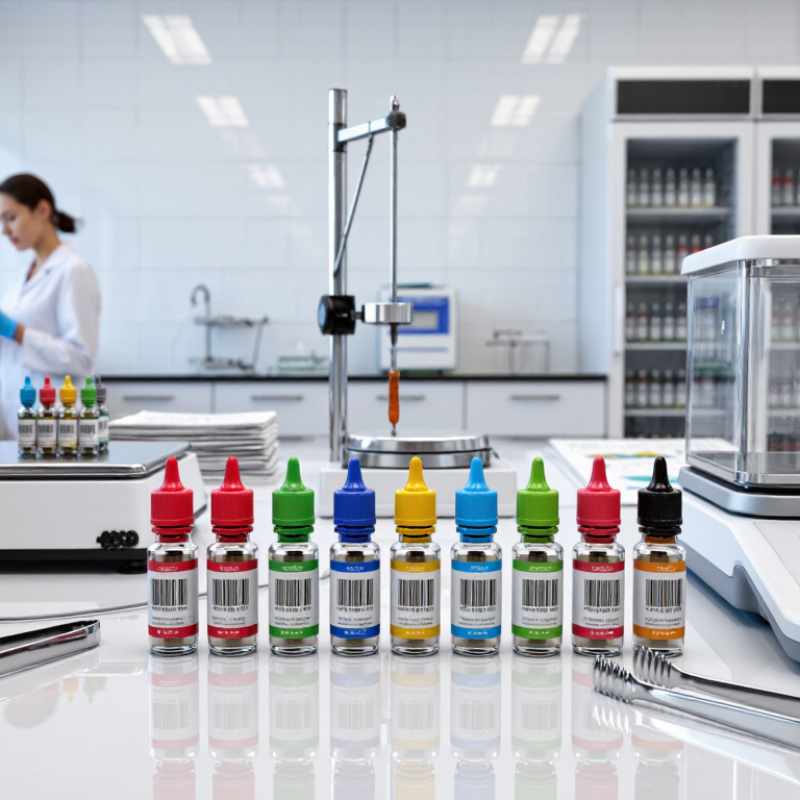
Defining vape flavoring requirements begins with the destination market, not the flavor name. The World Health Organization reported in 2024 that more than 100 million people use e-cigarettes globally. Requirements therefore vary widely across adult consumer markets. Build a country matrix covering permitted ingredients, concentration limits, labeling language, nicotine rules, packaging, and documentation. A pleasant fruit profile may still fail a local review.
Quality must be measurable. Ask suppliers for a complete specification, certificate of analysis, safety data sheet, allergen statement, and batch traceability record. Confirm identity using chromatographic testing, not appearance alone. Food-use approval is not automatically suitable for inhalation products. This distinction is often missed. Require evidence for each carrier, sweetener, cooling agent, and aromatic compound. Stability data should cover heat, light, storage time, and the final formulation.
Global demand also raises sourcing pressure. Grand View Research valued the global e-cigarette and vape market at approximately USD 28.17 billion in 2023, with strong projected growth through 2030. That growth can encourage rushed substitutions. Keep approved samples, change-control procedures, and retained batches for comparison. I would also test the flavor after transport, because a formula that performs well in a laboratory may shift inside a hot shipping container. Some requirements remain unclear across jurisdictions, so local regulatory review is essential.

Sourcing vape flavorings for global markets begins with supplier evidence, not attractive catalogs. Ask for a current specification sheet, allergen declaration, safety data sheet, and batch-specific certificate of analysis. Each document should match the exact product code and lot number. Vague paperwork is a warning sign. In practice, request samples from two production lots before discussing volume pricing.
Quality checks should cover more than taste. An independent laboratory can verify identity, purity, residual solvents, heavy metals, and microbiological limits, where applicable. Keep sealed samples in controlled storage, then compare color, aroma, and viscosity after transport. A flavor that arrives clear may change after heat exposure. That detail matters. Supplier audits should review traceability, cleaning records, change-control procedures, and complaint handling. A polished factory is not enough.
Global distribution adds regulatory risk. Confirm that each ingredient and finished formulation is permitted in the destination market. Request written statements on restricted substances, intended use, and labeling support. Local specialists should review the file before sale. Do not rely on one test report forever; methods, regulations, and suppliers change. Sourcing notes should include dates, deviations, and unanswered questions. That section is easy to skip. It may be the most honest part of the evaluation. A supplier who welcomes difficult questions is easier to manage, but trust still requires evidence.
This checklist counts the core evidence items commonly reviewed during international flavoring procurement. Supplier approval should confirm ingredient identity, batch-level quality records, safety documentation, traceability, and market-specific compliance before commercial use.
International sourcing begins with the destination market, not the flavor catalogue. Each country may define vape flavorings differently. Some treat them as chemical mixtures, while others apply tobacco, consumer product, or inhalation rules. Confirm requirements with a qualified local regulatory adviser before requesting samples or placing orders. Rules can change quickly.
Ask suppliers for current certificates of analysis, safety data sheets, ingredient specifications, allergen statements, and batch traceability records. Food-grade approval alone does not prove inhalation suitability. That distinction matters. Review restricted substances, concentration limits, labeling duties, packaging rules, and language requirements for every target market. Keep evidence for each production batch.
A reliable supplier should explain its quality controls clearly. Check manufacturing hygiene, change-control procedures, contaminant testing, and retention-sample policies. Independent laboratory verification can identify gaps between paperwork and actual composition. Do not rely on a polished certificate. Verify its date, scope, issuing laboratory, and connection to the exact batch.
One uncomfortable lesson is that compliance files often look complete while missing transport or disposal requirements. Build a market-by-market checklist and update it after regulatory changes. Review flavor descriptions carefully, too. A familiar name may imply a health benefit or mislead consumers. Internal review should include regulatory, technical, and quality staff before any commercial launch. Mistakes are costly.
Sourcing vape flavorings for global markets begins with disciplined documentation, not attractive sample names. Each ingredient should carry a supplier qualification record, CAS number, safety data sheet, certificate of analysis, allergen statement, and traceable lot code. Food-grade status is not proof of inhalation safety. The intended exposure route matters.
Testing should reflect the finished product. A practical workflow includes identity testing by GC-MS or HPLC, impurity screening, heavy-metal analysis, and aerosol carbonyl testing under validated conditions. Keep the test temperature, power setting, device, batch number, and laboratory method together. ISO 20768:2018 supports consistent vaping-machine measurements. Still, laboratory consistency does not equal complete safety. Some assumptions need challenging.
Consumer scrutiny is also measurable. The 2023 National Youth Tobacco Survey, published in MMWR, reported that 2.13 million US students currently used e-cigarettes, and 90.3% of those users chose flavored products. This finding increases regulatory attention around flavor profiles, labeling, and youth appeal. A global file should therefore include toxicological rationale, exposure estimates, stability results, and market-specific label checks. Flavor names can mislead. “Fruit” does not explain chemical composition. Retain samples from every batch, review supplier changes, and investigate unexpected color, odor, or viscosity shifts. Documentation is often treated as paperwork. It is really the product’s memory.
Global sourcing starts with a market-by-market compliance map. Flavoring suppliers should provide a current specification, certificate of analysis, safety data sheet, allergen statement, and full lot traceability. Confirm that each ingredient is permitted for the intended product category and destination. Requirements can differ sharply across jurisdictions. The World Health Organization’s FCTC reports that more than 180 parties have adopted tobacco-control measures, so regulatory review cannot be an afterthought. Maritime planning also matters. UNCTAD’s Review of Maritime Transport 2024 states that over 80% of global merchandise trade moves by sea. A delayed container can therefore interrupt several markets at once.
Tips: Qualify two suppliers in different regions. Keep a safety stock based on actual lead times, not optimistic estimates. Use sealed, clearly labeled containers and review temperature limits before shipping. Ask freight partners about customs documentation, insurance, route changes, and dangerous-goods classification when applicable. The World Bank’s Logistics Performance Index 2023 evaluates customs, infrastructure, tracking, and timeliness; use these indicators when comparing sourcing countries.
Supply continuity needs practical testing. Run a small pilot shipment before signing a large contract. Compare flavor consistency, packaging condition, customs clearance, and delivery variance. Reserve approved alternative ingredients, but do not switch them without renewed quality checks. A cheaper supplier may create higher costs through rework or border delays. Our first forecast may still be wrong. Weather, port congestion, and regulatory updates can change quickly. Monthly supplier reviews, batch records, and documented corrective actions make those surprises easier to manage.
A practical planning matrix for vape flavoring procurement. Lead times, transport windows, and inventory levels are indicative planning ranges and should be confirmed with qualified suppliers, logistics providers, and local regulatory advisers before purchase.
| Target Market | Key Compliance Check | Preferred Flavoring Specification | Typical Sourcing Lead Time | Indicative Transit Planning | Recommended Safety Stock | Supply Risk | Continuity Action |
|---|---|---|---|---|---|---|---|
| European Union | Check national implementation of the Tobacco Products Directive, product notification requirements, ingredient restrictions, packaging rules, and applicable CLP obligations. | Documentation-ready flavor concentrates with full ingredient disclosure, allergen information, safety data, batch traceability, and evidence that ingredients are suitable for the intended inhalation application. | 4–8 weeks for approved items; 8–12 weeks for new development | 3–7 business days within Europe; 4–8 weeks from Asia by ocean freight | 8–12 weeks of forecast demand | Medium | Maintain an approved secondary source, pre-qualify equivalent formulations, and keep regulatory files updated for every formulation change. |
| United Kingdom | Verify current MHRA notification requirements, nicotine-product rules where applicable, labeling, packaging, advertising, and post-Brexit import documentation. | Use stable, traceable flavor concentrates supported by specifications, certificates of analysis, safety data sheets, allergen declarations, and change-control records. | 4–8 weeks for standard items; 8–12 weeks for custom blends | 2–5 business days from European warehouses; 4–7 weeks from Asia by ocean freight | 8–10 weeks of forecast demand | Medium | Hold stock in a regional warehouse and separate UK inventory planning from European Union inventory to reduce customs-related disruption. |
| United States | Assess federal and state requirements, including FDA tobacco-product obligations, ingredient records, manufacturing controls, labeling, and market authorization status for the finished product. | Select concentrates with complete composition records, toxicological support where available, batch testing, and clear documentation for regulatory review and customer due diligence. | 6–10 weeks for approved items; 10–16 weeks for new documentation packages | 5–10 business days by air; 4–7 weeks from Asia by ocean freight | 10–16 weeks of forecast demand | High | Use a compliance gate before purchase orders, maintain domestic buffer stock, and avoid changing flavor composition without documented regulatory assessment. |
| Canada | Review federal vaping-product requirements, nicotine and health-warning rules, packaging and labeling obligations, excise requirements, and provincial restrictions. | Require batch-specific certificates of analysis, ingredient and allergen declarations, contaminant limits, packaging compatibility data, and documentation suitable for Canadian import records. | 5–9 weeks for standard items; 8–14 weeks for custom blends | 5–10 business days by air; 4–8 weeks by ocean freight | 10–14 weeks of forecast demand | Medium | Maintain a Canadian import checklist, use bilingual labeling where required, and qualify one alternative flavor profile for each high-volume product. |
| Japan | Confirm classification of the product, nicotine status, import controls, food and chemical documentation, labeling, and any prefectural or channel-specific requirements. | Favor low-variation concentrates with Japanese-language technical documentation, odor and color specifications, stability data, and conservative ingredient screening. | 6–10 weeks for approved items; 10–16 weeks for new market review | 3–7 business days by air; 3–6 weeks by ocean freight | 10–14 weeks of forecast demand | High | Obtain written classification advice before commercialization and keep a local importer or regulatory contact involved in every formulation change. |
| Australia | Verify the current therapeutic-goods, prescription, import, state, and territory requirements, especially where nicotine-containing products are involved. | Source concentrates with robust safety files, batch traceability, stability information, and documentation that supports the applicable therapeutic or consumer-product pathway. | 6–12 weeks for approved items; 10–18 weeks for new approvals | 5–10 business days by air; 5–9 weeks by ocean freight | 12–16 weeks of forecast demand | High | Confirm the import pathway before manufacturing, hold additional ocean-freight coverage, and maintain a separate plan for airfreight emergency replenishment. |
| South Korea | Check national tobacco, chemical, labeling, import, and product-safety requirements, including documentation required by the local importer. | Use concentrates with Korean-ready technical files, consistent sensory specifications, impurity controls, and verified packaging compatibility. | 5–9 weeks for approved items; 8–14 weeks for custom blends | 3–7 business days by air; 3–6 weeks by ocean freight | 8–12 weeks of forecast demand | Medium | Appoint a qualified local importer, translate controlled documents before shipment, and maintain an alternative port and carrier plan. |
| Gulf Cooperation Council Markets | Verify country-specific tobacco, customs, halal, labeling, chemical, and product-registration requirements because rules can differ between member states. | Choose heat- and light-stable concentrates with halal-status documentation where relevant, clear storage conditions, and strong batch and origin traceability. | 6–10 weeks for approved items; 10–16 weeks for new registration work | 5–12 business days by air; 4–8 weeks by ocean freight | 12–16 weeks of forecast demand | High | Use country-level compliance files, avoid assuming one approval covers all markets, and plan for seasonal congestion and extended customs clearance. |
| Latin America | Review country-specific restrictions on vaping products, flavorings, nicotine, advertising, imports, and registration; requirements vary substantially by jurisdiction. | Prefer versatile concentrates with long shelf-life data, Spanish or Portuguese documentation where required, and adaptable packaging and labeling support. | 6–12 weeks for approved items; 10–18 weeks for new market entry | 7–15 business days by air; 5–10 weeks by ocean freight | 12–16 weeks of forecast demand | High | Conduct a country-by-country legal review, use local import specialists, and avoid committing production until customs and saleability are confirmed. |
| Southeast Asia | Confirm local restrictions because several markets prohibit or tightly control vaping products, while others apply separate import, tax, and labeling rules. | Source only after market legality is confirmed; require full composition, safety, transport, and storage documentation for every destination. | 5–10 weeks for approved items; 8–16 weeks for new market review | 3–10 business days by air; 3–7 weeks by ocean freight | 10–16 weeks of forecast demand | High | Apply a destination-approval gate, use separate stock-keeping units for different regulatory markets, and pause shipments when local rules are unclear. |